Items not labeled as Rapid Ship or Pre-arrival may require a transfer from the warehouse to our shipping facility before shipping, which can take 4–6 business days. Learn more on the Shipping Info page.


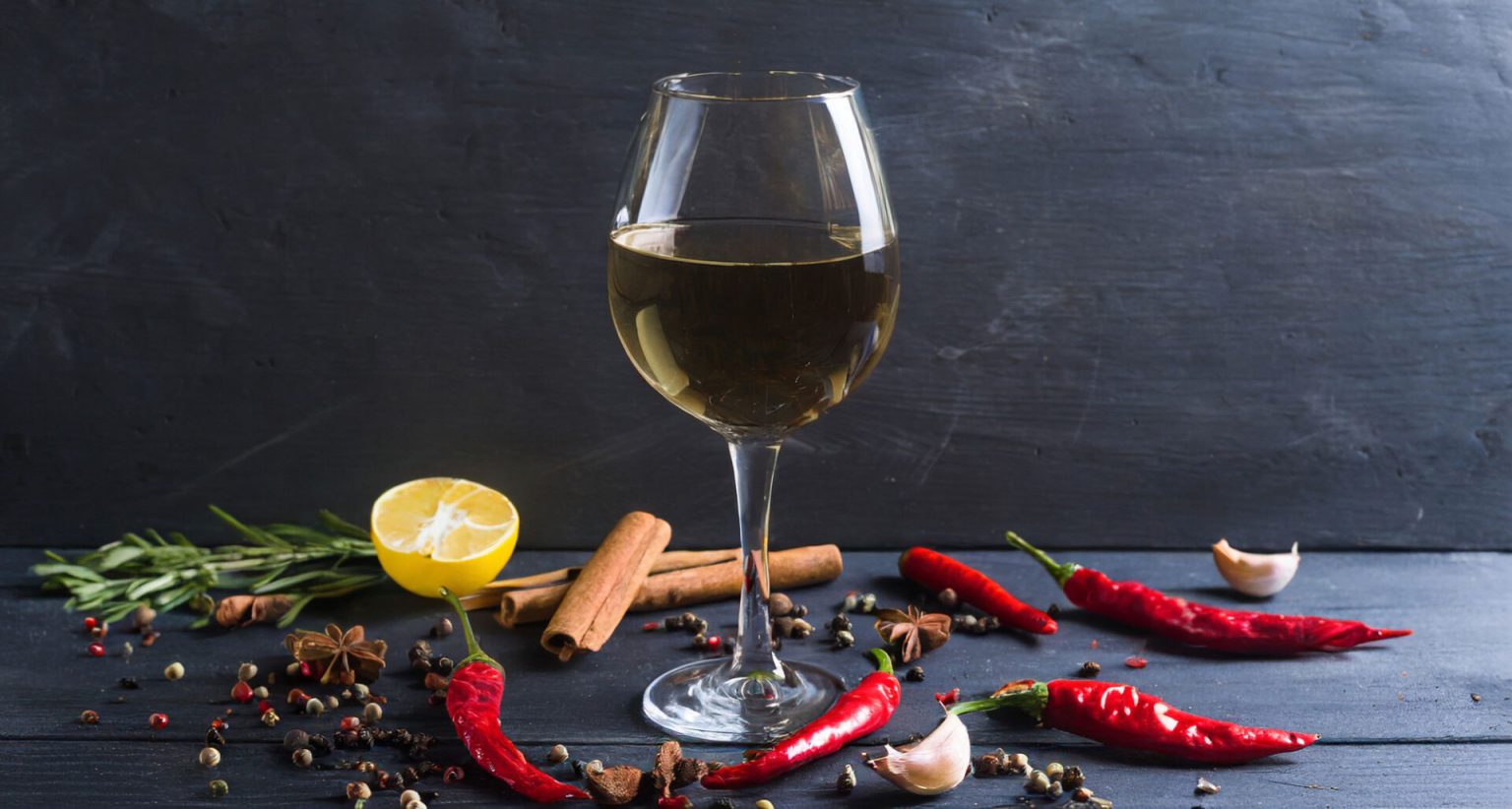
Pairing Wine with Spices: A Culinary Adventure

Food is spicier now than it used to be. Blame (or credit) the expanding global influence on how and what Americans eat. Flavors and aromas that once lurked in the shadows of ethnic restaurants and grandma’s kitchen are now on the center of the table. By and large, it is spices delivering the news. Either ones previously unknown or familiar staples in novel combinations. As much as this change has been welcomed, it has disrupted traditional ideas around food and wine pairing. So much so that “pairing” as a goal is being replaced by “interaction” as an understanding. How, what and why to drink is now a conversation not a conclusion. So let’s have one.
First, there is spice and there is spicy.
Spices are dried roots, seeds, and fruits of plants (the fresh parts are herbs). Cinnamon, nutmeg, cumin, paprika and turmeric are common examples. They have flavors and aromas of their own and also enhance those of the foods they are added to. Some, like cayenne, black pepper, or ginger also cause a burning sensation in our mouths. This is what we call spicy. Rather than a taste or smell, spiciness is the reaction of thermoreceptors, which is why we also refer to spicy foods as “hot”. Important to note that things other than spices can trigger this reaction. In other words, spices can be spicy, but not all spicy things are spices.
Wine can be a welcome companion to both spiced and spicy foods, but different strategies are required.
Let’s start with spiced. The strategy here is matching. Spices are among the flavor and aroma descriptors of many wines. Aligning one or two of these with the same in the food. Doing so creates a strong connection that elevates the whole experience.
Employing this strategy can work in either direction. If you have a specific wine picked out, a preliminary sniff and sip can point you to a similarly spiced dish. If the menu is already set, select a wine known by experience or reputation to have something in common with the ingredients.
A few examples to get you started: Chardonnay can smell like saffron. A key flavor marker of Shiraz is black pepper. New oak barrels, used in the production of many red and white wines, can contribute their own clove and baking spice notes.
Keep in mind that some spices are the dried counterpart to fresh herbs. Sauvignon Blanc has a pungent herbaceous character that can make a pleasing match with spices like oregano, rosemary, or basil.
This is where experimentation really comes into play. Taste the wine, taste the food. Decide for yourself. Although the stated goal is similarity, maybe you’ll find contrast more interesting.
Spicy-ness presents a different challenge. The general strategy is to form a complimentary relationship. That is, to find a wine that effectively counters and harmonizes with the heat of the food. This can absolutely be done but there are definitely some hard don’ts. We’ll start with those.
Alcohol exaggerates heat and vice versa. Drinking a high abv wine with spicy food is literally like pouring gas on a fire. Avoid Cabernet Sauvignon, Shiraz and Zinfandel, unless breathing fire is what you’re in to.
Ditto acid, not quite as profoundly as alcohol but still not a recipe for success. Leave the bubbles, Pinot Grigio and Sauvignon Blanc on the rack. Be careful with Chardonnay, especially unoaked.
Tannin and spiciness also do not get along. Cabernet, Merlot, and Nebbiolo are out.
Having crossed a few off, there are still plenty of wines on the Pair With Spicy menu. When choosing it’s important to consider the intensity of the spiciness and the overall flavor profile of the dish.
Sugar in a wine balances heat and enhances other flavor elements. Therefore, off-dry or slightly sweet white wines, like Riesling or Gewürztraminer, work well with all but the highest levels of spiciness and a wide range of flavors. Very spicy foods need the intense sweetness of wines like Moscato or late-harvest Riesling to tame their flames. Another approach to consider when dealing with an extremely spicy dish, try serving it with cooling elements like yogurt, cucumber, or a mint chutney. These can provide a nice contrast to the heat and expand the wine pairing options.
With mild to moderate spicy dishes, especially those with a tomato sauce or broth, a dry or off-dry rosé is a great choice. Its deft fruitiness vibes with other light flavors.
Moderately spicy, savory foods, like BBQ, want fruitiness to balance their heat and structure to meet their deep flavors. Light to medium-bodied, low tannin red wines like Pinot Noir or Grenache are a solid match. Lower alcohol Zinfandel can work here as well.
Finally, whether pairing with spiced or spicy foods, it is sometimes useful to fall back on the old adage “What grows together goes together”. For example, Thai culture and cooking has a fair dose of French influence, so reach for an Alsatian white with Asian curry. Many grape varieties are native to the Fertile Crescent and there is significant evidence that viticulture and winemaking originated there. This makes Syrah a delicious, historically correct pairing with fragrant Middle Eastern cuisines. More recently, Baja Mexico is emerging as a dynamic wine region. Too soon to tell if their offerings are a match with enchiladas but it can’t hurt to try.