We use cookies to ensure that we give you the best experience on our website.
Items not labeled as Rapid Ship or Pre-arrival may require a transfer from the warehouse to our shipping facility before shipping, which can take 4–6 business days. Learn more on the Shipping Info page.
In-store Only Items
These items are available at our location to purchase in-store, or to choose in-store pickup at checkout.
Long-term Pre-arrival Items
Long Term Pre-arrival Definition: Ordering wine directly through us from our supplier partners in Europe in advance of the item’s physical arrival in the US.
Long Term Pre-arrival sales ensure you’re getting the best possible price and that you have also secured the product before it hits the normal retail supply chain. The lead time for Pre-arrival goods is generally 4–8 months, sometimes longer based on supply chain and the logistics of transporting goods overseas. The expectation, from our team, is to communicate to the customer the location of their purchase every step of the way.
This product is offered as a full case purchase option, minimum order quantities may be applicable. When available, multiple case options will be presented. If you are purchasing a Pre-Arrival item you must order a solid case.
Rapid Ship
Items listed as "rapid ship" are in stock and available for immediate pickup or shipment. Those that do not have the "rapid ship" icon are housed with our supplier and must be transferred to our warehouse before they can be picked up or shipped. This requires 4-6 business days but usually occurs sooner. Some products will list both options of availability as there will be a certain number in stock, with the option to order additional bottles to be transferred from the supplier.
We offer FREE ground shipping and discounted upgraded shipping on orders with multiples of 12 qualifying bottles. Solid cases or mix-and-match, look for the yellow 12 FREE badge and save!
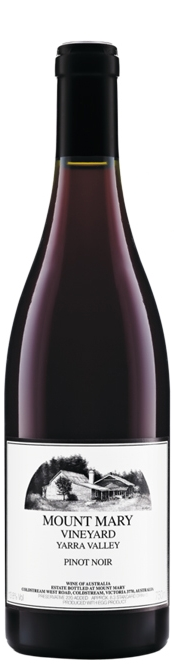
Sample image only.Please see Item description for product Information. When ordering, the item shipped will match the product listing if there are any discrepancies. Do not order solely on the label if you feel it does not match product description.
SKU 992496
Out of stock
Want to be notified when this product is back in stock?
The 2021 Pinot Noir is aromatic and silky (two obvious qualities I accept). It offers notes of redcurrant, pomegranate, cherry, tobacco, graphite/lead pencil, a hint of poached strawberry and even inflections of sumac. Quince paste is suggested, and quince paste it is. (The power of suggestion is strong, but sometimes it’s apt—you’ve got to be big enough to own up to descriptors that aren’t your own.) There are also juicy, ripe, summer strawberries. This is spiced and rich and sits firmly on the mid-palate, but it is supple and succulent also. Cool-feeling tannins shape the fruit in the mouth and draw the wine out over the long finish. It has a super svelte, streamlined shape. The tannins are gently chewy and persist through the finish. This is a lovely wine. It is placid but sure, sapid. No whole bunches contribute to the texture here. It has super fine tannins. Four to six days pumped over, the wine was plunged rigorously during ferment. Generally, it sits on the skins for a couple of days post-ferment (14-16 days in total) and then is pressed. It matured in 25% new oak for 14-16 months. 13.3% alcohol, sealed under natural cork.
Regularly described as being the grape varietal responsible for producing the world's most romantic wines, Pinot Noir has long been associated with elegance and a broad range of flavors The name means 'black pine' in French, and this is due to the fact that the fruit of this particular varietal is especially dark in color, and hangs in a conical shape, like that of a pine cone. Despite being grown today in almost every wine producing country, Pinot Noir is a notoriously difficult grape variety to cultivate. This is because it is especially susceptible to various forms of mold and mildew, and thrives best in steady, cooler climates. However, the quality of the fruit has ensured that wineries and vintners have persevered with the varietal, and new technologies and methods have overcome many of the problems it presents. Alongside this, the wide popularity and enthusiasm for this grape has ensured it will remain a firm favorite amongst wine drinkers for many years to come.
Country
Australia
Whilst most of Australia consists of arid deserts and dense bushland, the oceanic coasts to the south of the country have a terrain and climate ideal for vine cultivation and wine production. It took several decades of failed attempts at the end of the 18th century in order to produce vines of a decent enough quality for making wine, but since those first false starts, the Australian wine industry has continued to grow and grow. Today, wine production makes up for a considerable part of the Australian economy, with exports in recent years reaching unprecedented levels and even overtaking France for the first time ever. Whilst the greatest successes in regards to quality have been the result of the Syrah grape varietal (known locally as Shiraz), Australia utilizes several Old World grapes, and has had fantastic results from Cabernet Sauvignon, Merlot, Riesling, Chardonnay and more. As the Australian passion for locally produced wine continues to develop, wineries have begun experimenting with a wider range of grape varietals, meaning that nowadays it isn't uncommon to find high quality Australian wines made from Petit Verdot, Sangiovese, Tempranillo and Viognier, amongst many others.
Region
Victoria
The Australian region of Victoria is the country's most historically significant wine region, with vine cultivation and wine production going on there since the mid 19th century. In those times, Victoria produced over half of all Australia's wines. However, today, despite having a huge number of wineries, Victoria has begun to focus on quality over quantity – many of the six hundred wineries based in this region produce wines made from lesser known grape varietals, often producing fascinating wines full of character, but made from vines with far lower yields and a considerably smaller audience. Today, most of the viticulture in Victoria takes place near the cool, coastal region around Melbourne. However, recent years have seen irrigation projects help wine makers grow vines in the more arid parts of the region, with a wide range of grapes now being grown.
Appellation
Port Phillip
WA96pts
Wine Advocate
The 2021 Pinot Noir is aromatic and silky (two obvious qualities I accept). It offers notes of redcurrant, pomegranate, cherry, tobacco, graphite/lead pencil, a hint of poached strawberry and even inflections of sumac. Quince paste is suggested, and quince paste it is. (The power of suggestion is strong, but sometimes it's apt—you've got to be big enough to own up to descriptors that aren't your own.) There are also juicy, ripe, summer strawberries. This is spiced and rich and sits firmly on the mid-palate, but it is supple and succulent also. Cool-feeling tannins shape the fruit in the mouth and draw the wine out over the long finish. It has a super svelte, streamlined shape. The tannins are gently chewy and persist through the finish. This is a lovely wine. It is placid but sure, sapid. No whole bunches contribute to the texture here. It has super fine tannins. Four to six days pumped over, the wine was plunged rigorously during ferment. Generally, it sits on the skins for a couple of days post-ferment (14-16 days in total) and then is pressed. It matured in 25% new oak for 14-16 months. 13.3% alcohol, sealed under natural cork.