Items not labeled as Rapid Ship or Pre-arrival may require a transfer from the warehouse to our shipping facility before shipping, which can take 4–6 business days. Learn more on the Shipping Info page.
In-store Only Items
These items are available at our location to purchase in-store, or to choose in-store pickup at checkout.
Long-term Pre-arrival Items
Long Term Pre-arrival Definition: Ordering wine directly through us from our supplier partners in Europe in advance of the item’s physical arrival in the US.
Long Term Pre-arrival sales ensure you’re getting the best possible price and that you have also secured the product before it hits the normal retail supply chain. The lead time for Pre-arrival goods is generally 4–8 months, sometimes longer based on supply chain and the logistics of transporting goods overseas. The expectation, from our team, is to communicate to the customer the location of their purchase every step of the way.
This product is offered as a full case purchase option, minimum order quantities may be applicable. When available, multiple case options will be presented. If you are purchasing a Pre-Arrival item you must order a solid case.
Rapid Ship
Items listed as "rapid ship" are in stock and available for immediate pickup or shipment. Those that do not have the "rapid ship" icon are housed with our supplier and must be transferred to our warehouse before they can be picked up or shipped. This requires 4-6 business days but usually occurs sooner. Some products will list both options of availability as there will be a certain number in stock, with the option to order additional bottles to be transferred from the supplier.
We offer FREE ground shipping and discounted upgraded shipping on orders with multiples of 12 qualifying bottles. Solid cases or mix-and-match, look for the yellow 12 FREE badge and save!
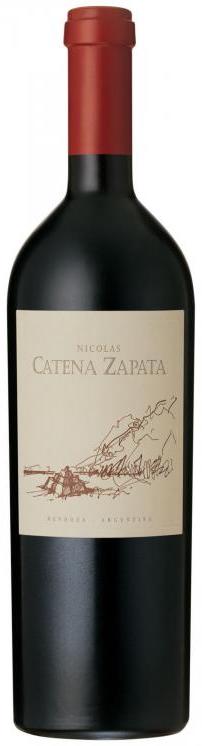
Catena Zapata Red Blend Nicolas Catena Zapata 2013 750ml
Case of 6
OUT OF STOCKPre-arrival
Sample image only.Please see Item description for product Information. When ordering, the item shipped will match the product listing if there are any discrepancies. Do not order solely on the label if you feel it does not match product description.
SKU 884100
$611.70/case
$101.95/bottle
Tariffs included
Out of stock
Want to be notified when this product is back in stock?
The 2013 Nicolás Catena Zapata is a blend of 75% Cabernet Sauvignon and 25% Malbec from the La Pirámide, Adrianna and Nicasia vineyards. It is perfectly clean and focused, a noticeable improvement over the 2012 vintage. The Cabernet Sauvignon from this cool vintage seems to have a more restrained character that made me think of Cabernet Franc, very classical and serious. They have been harvesting earlier and earlier in search of balance and freshness, and the strategy has definitely worked. It has great freshness and focus, and the lower alcohol and acidity seem to make the wine integrate the oak very nicely. This has to be one of the finest vintages of Nicolás Catena Zapata.
Argentina, a land of immense beauty and diverse landscapes, is also home to a vibrant and rapidly growing wine industry. For those seeking to explore new horizons in the world of wine, Argentina offers a tantalizing journey. With a rich history, unique climate conditions, and a wide array of grape varietals, Argentine wines are as […]
Nestled in the western part of Argentina, Cuyo is the heartbeat of the country’s wine production. Comprising the provinces of Mendoza, San Juan, and San Luis, this vast region offers a rich tapestry of terroirs and grape varietals, producing wines celebrated for their unique characteristics. If you’re an enthusiast looking to embark on a journey […]
Mendoza, Argentina’s premier wine region, is a captivating destination for wine enthusiasts seeking to explore a landscape rich in tradition, diverse terroirs, and exceptional grape varietals. Situated within the broader Cuyo region, Mendoza is celebrated for its high-altitude vineyards and its pivotal role in shaping Argentina’s winemaking identity. Climate and Terroir Mendoza’s climate is a […]
The 2013 Nicolás Catena Zapata is a blend of 75% Cabernet Sauvignon and 25% Malbec from the La Pirámide, Adrianna and Nicasia vineyards. It is perfectly clean and focused, a noticeable improvement over the 2012 vintage. The Cabernet Sauvignon from this cool vintage seems to have a more restrained character that made me think of Cabernet Franc, very classical and serious. They have been harvesting earlier and earlier in search of balance and freshness, and the strategy has definitely worked. It has great freshness and focus, and the lower alcohol and acidity seem to make the wine integrate the oak very nicely. This has to be one of the finest vintages of Nicolás Catena Zapata.
DC95pts
Decanter
Founded in 1902, Bodega Catena Zapata has become revered by many as the pioneer of high-altitude wines and the re-emergence of the Malbec grape in Argentina. The Mayan-styled winery nestles in the foothills of the Andes at Agrelo. The Nicolás Catena Zapata is a blend of 75% Cabernet Sauvignon and 25% Malbec, sourced from La Pirámide (950m), Nicasia (1,095m) and Adrianna vineyards (1,450m), in Agrelo, Altamira and Gualtallary. It's aged for 18 months in French oak barrels. Paz Levinson: This has elegant aromas of cedar box, tobacco and earthy nuances. The wine has a medium body; it’s elegant, evident from its ageing. The Cabernet gives length and good acidity to the wine whilst the Malbec offers juicy plummy fruit. Peter Richards MW: There’s toasty aromas of roasted pepper and red and dark fruit. It has a lovely leafy complexity! Real freshness and lift here. The palate is fresh but tense, with lovely savoury complexity. It’s fundamentally a mid-weight wine - and so much the better for it: Long, precise, savoury and complex. This is not typically Argentina but brilliant stuff nonetheless, a lighter mezzo forte style. Love it! Dirceu Vianna Junior MW: There’s buckets of red and dark fruit still apparent despite its age. It also displays notes of dried herbs, chocolate, sweet spices and beautifully leafy notes. On the palate it combines ripe juicy and cedar with beautiful savoury notes finishing savoury and persistent.
JS94pts
James Suckling
Extremely polished and refined with blueberries, wet earth and dark chocolate. Tight and reserved. Medium to full body, fine and velvety tannins and a long and flavorful finish. This shows depth and beauty. Best bonarda in Argentina and shows the excitement of this grape varietal. Drink now.
VM94pts
Vinous Media
Dark ruby-red. Pungent but classy aromas of cassis and blackberry are a bit inkier and more subdued than those of the Malbec Argentino. Very smooth, dry, savory and backward, with its tangy red and black fruit flavors complicated by minerals and hints of green and black pepper. Really bulletproof fruit here--and wonderfully energetic. Half of the fruit comes from the cool Adrianna vineyard in Gualtallary, where Cabernet Sauvignon--and Franc--do especially well, according to winemaker Alejandro Vigil. I'd wait at least a year or two to enjoy this wine, which has plenty of tannic spine for aging.
WE94pts
Wine Enthusiast
Generous oak is reflected via aromas of hickory and smoke on the nose of this lusty but refined blend of Cabernet and Malbec. In the mouth, rugged tannins and high acidity suggest further cellaring. Flavors of plum, berry, chocolate and tomato sauce finish with dry, pulling tannins and a sense of acidic freshness. Drink through 2027. (Cellar Selection)
Winery Notes
Nicolás Catena Zapata has an intense, deep purple color with bluish-black tones. On the nose, aromas of black fruits – blackberries, black cherries, black plums – predominate with subtle notes of vanilla and dark chocolate intermingled with savory hints of green olive and a stony minerality. On the palate, the wine is tremendously complex, unfolding layer upon layer of red currant, eucalyptus, and black pepper flavors. Black cherries and blackberries give way to cassis followed by a hint of saline minerality. The wine is remarkably concentrated with a firm tannic structure providing the backbone for the lush fruit. The finish is long, a foretoken of the long aging potential of this Argentine masterpiece.