Items not labeled as Rapid Ship or Pre-arrival may require a transfer from the warehouse to our shipping facility before shipping, which can take 4–6 business days. Learn more on the Shipping Info page.


Chateau Branaire Ducru Saint Julien 2023 750ml
Case of 6
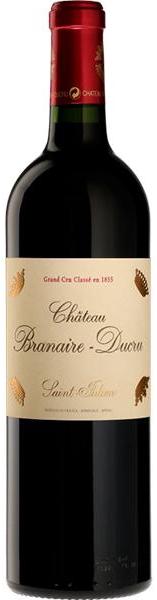
Sample image only.
Please see Item description for product Information. When ordering, the item shipped will match the product listing if there are any discrepancies. Do not order solely on the label if you feel it does not match product description.
SKU 1006698
$357.12/case
$59.52/bottle
Tariffs included
Availability: This is a Long-term Pre-arrival item and is available for online ordering only. This item will ship on a future date after a 4-8 months transfer time. For more about Pre-arrival orders, see FAQ.
 Pre-arrival
 Case Only
Minimum order 6 bottles
Classic Saint-Julien with a layer of minerals over the fruit, showing clear aromas of cassis and citrus plus a touch of fine, roasted spices. A hint of graphite and tobacco. Medium-bodied, taut and precise, with intensity and a long, integrated finish. This is more about elegance than power and density. A blend of 61% cabernet sauvignon, 30% merlot, 5.5% cabernet franc and 3.5% petit verdot. Drinkable now but better from 2027.
More Purchase Options:



Similar Products From The Same Region
-
12 FREEWEWS

Chateau Langoa Barton Saint Julien 2018 750ml
Beautifully textured and rich in black-currant flavors and tannins, this is a generous wine. The fruits and the dusty tannins…
-
12 FREETWIWS

Chateau Lagrange Saint Julien 2019 750ml
Case of 12The 2019 Lagrange is composed of 80% Cabernet Sauvignon, 18% Merlot, and 2% Petit Verdot. Deep garnet-purple in color, it…
-
12 FREETWI

Chateau Lagrange Saint Julien 2018 750ml
The flagship 2018 Château Lagrange is a more dense, backward, serious wine, offering an unevolved yet incredibly promising bouquet of…
-
12 FREEWAJD
Chateau Lagrange Saint Julien 2020 750ml
The 2020 Lagrange is a fine follow-up to the excellent 2019. Offering up aromas of crème de cassis and plums…
-
12 FREEJSWE

Chateau Gloria Saint Julien 2015 750ml
Minty cassis, tobacco and berries with finely roasted spices. This is aging nicely, with a very good presentation of fine…
-
12 FREEJSVM
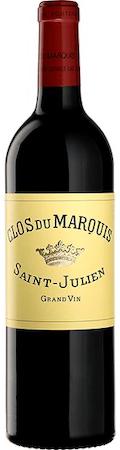
Clos du Marquis Saint Julien 2023 750ml
Fresh and floral, showing lilac, mint and light stone aromas that follow through to a medium body with really fine,…
More Products From This Winery See more
-
12 FREETWI

Chateau Branaire Ducru Saint Julien 2016 750ml
#16 TOP 100, 2019. The core of this red is loaded with pure plum, blueberry and black currant fruit flavors.…
-
12 FREEJSVM
Chateau Branaire Ducru Saint Julien 2018 750ml
Very attractive aromas of currants, tile and sandalwood with black and red currants. It’s full-bodied with a tight, dense center-palate…
-
12 FREEJSVM
Chateau Branaire Ducru Saint Julien 2020 750ml
Plenty of blackberry, blueberry, lead pencil and violet aromas here that follow through to a full body, with ultra-fine tannins…
-
12 FREEWEWS
Chateau Branaire Ducru Saint Julien 2015 750ml
This family-owned estate has produced a structured and dark wine with great concentration balanced by acidity and pure, creamy fruit.…
-
12 FREEWEWS
Chateau Branaire Ducru Saint Julien 2014 750ml
Spicy, rich and full of ripe fruit, this wine has great potential. It is structured and dense while bringing out…
-
12 FREE

Chateau Branaire Ducru Duluc de Branaire Ducru Saint Julien 2019 750ml